On most fabrication jobs the bevel is treated as an afterthought something the burner does before the welder arrives. It is usually the single biggest lever on weld cost. A root face that is 1 mm heavy turns a comfortable root pass into a repair; a bevel angle that wanders by 5 doubles the fill volume on a 25 mm plate. Choose the edge process before you choose the machine, because the process sets the geometry you can hold.
Three ways to make an edge, and what each one costs you
Oxy-fuel. The workhorse for 20100 mm plate. Cheap consumables, tolerant of mill scale, and it can cut bevels in one pass with a three-torch setup. The cost is thermal: a 1015 mm heat-affected zone, dross on the underside, and enough distortion on thin material that you will fight the fit-up afterwards.
Plasma. Two to four times the travel speed of flame on 625 mm, with a narrower HAZ and a squarer edge. You pay for consumables and for a power source sized to the thickness a 200 A machine is wasted on 6 mm and a 105 A machine will not cut 40 mm cleanly.
Machining. A milling head removes material rather than melting it. The result is a square, burr-free edge with a repeatable root face, no HAZ and no dross. It is the slowest of the three per metre and the only one that reliably holds a 0.5 mm land on thick plate which is why pressure-vessel and bridge work specify it.
What a CNC cutting table actually decides
Once you go CNC, the machine’s numbers set the envelope: how wide a plate you can process, how fast you can run, and how thick you can go before the process changes.
| Parameter | Range |
|---|---|
| Track gauge | 4,000 12,000 mm |
| Effective cutting width | 3,200 11,000 mm |
| Drive | Single-side or double-side |
| Traverse speed | 50 6,000 mm/min (double drive 50 12,000) |
| Torches | 2 CNC torches standard, expandable |
| Cutting thickness | Flame 6 100 mm; up to 350 mm on request. Plasma depends on the power source fitted |
| Optional functions | Torch height control, auto ignition, powder marking, water cooling, initial positioning, drilling |
Two numbers in that table matter more than the rest. Track gauge decides whether a 3 m wide plate is a routine job or a special order. Traverse speed is where single versus double drive shows up above roughly 6 m/min a single-side drive starts to skew on long cuts, and skew is what produces a bevel that is right at the start of the plate and 2 mm out at the end.
When a milling head beats a torch
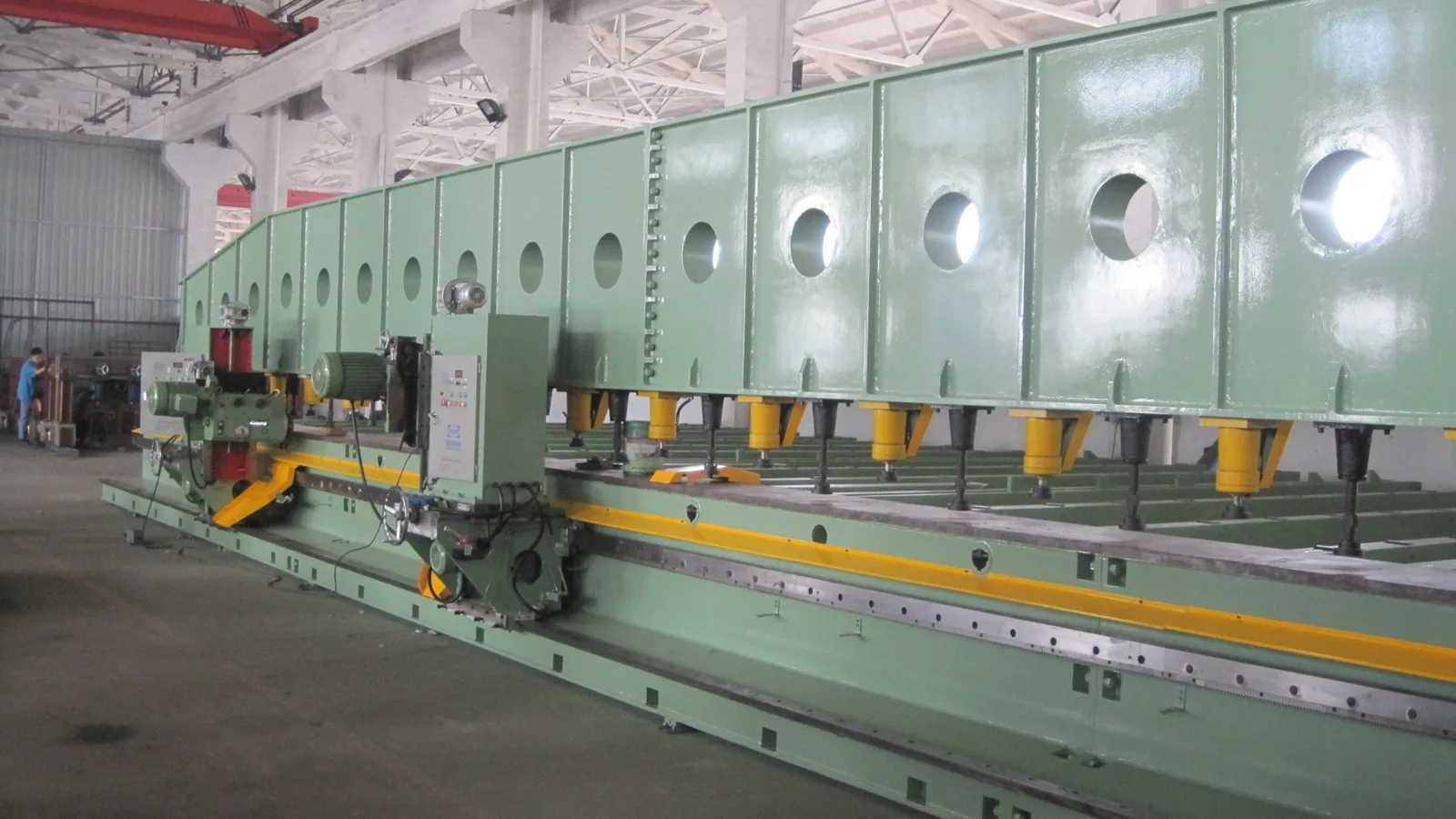
Edge milling machines earn their place on three jobs: thick plate where the root face has to be exact, stainless and duplex where thermal cutting contaminates the edge, and any part that will be welded with a narrow-gap or SAW procedure where fit-up tolerance is tight.
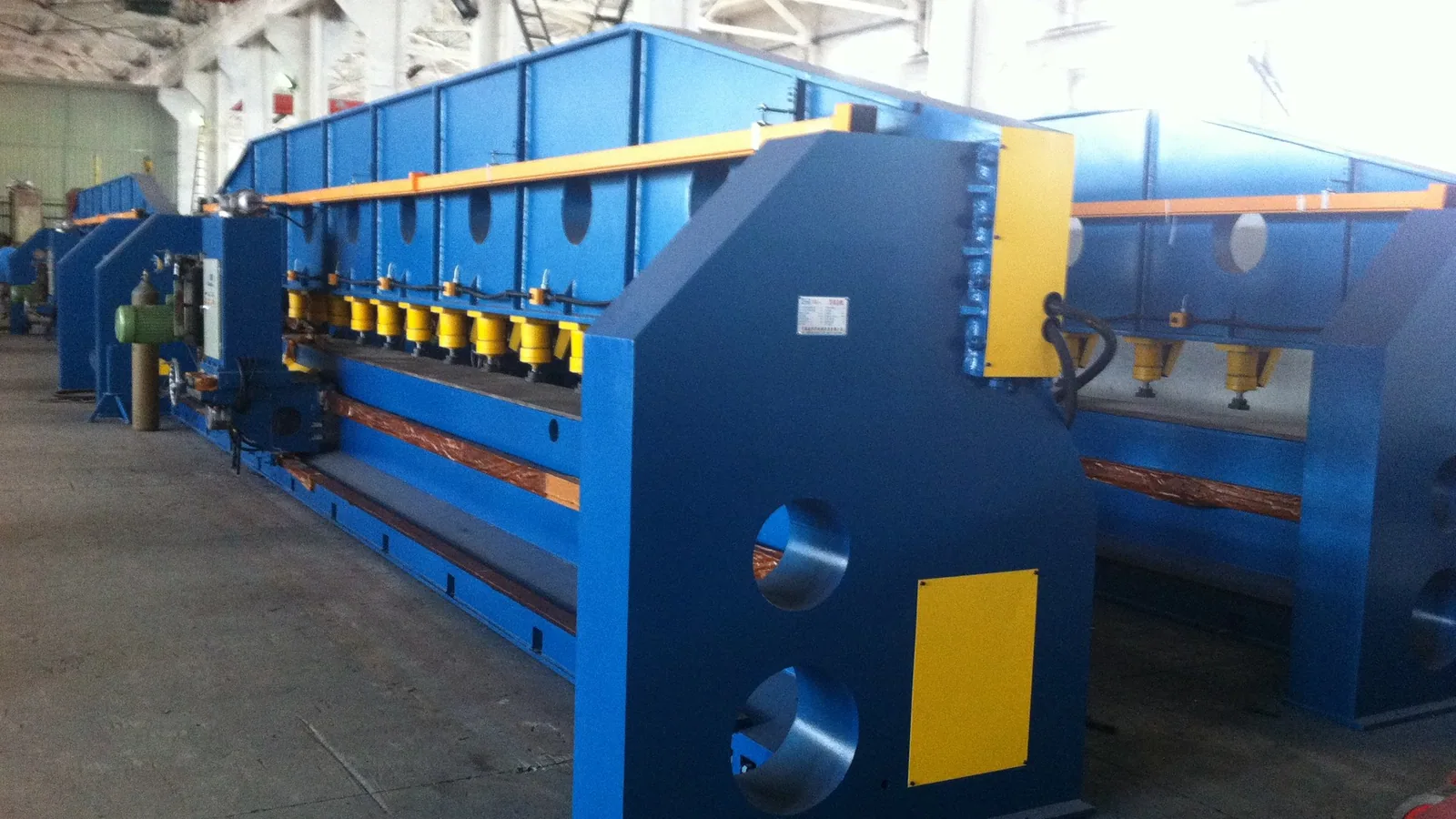
| Item | XBJ-6 | XBJ-9 | XBJ-12 | XBJ-15 |
|---|---|---|---|---|
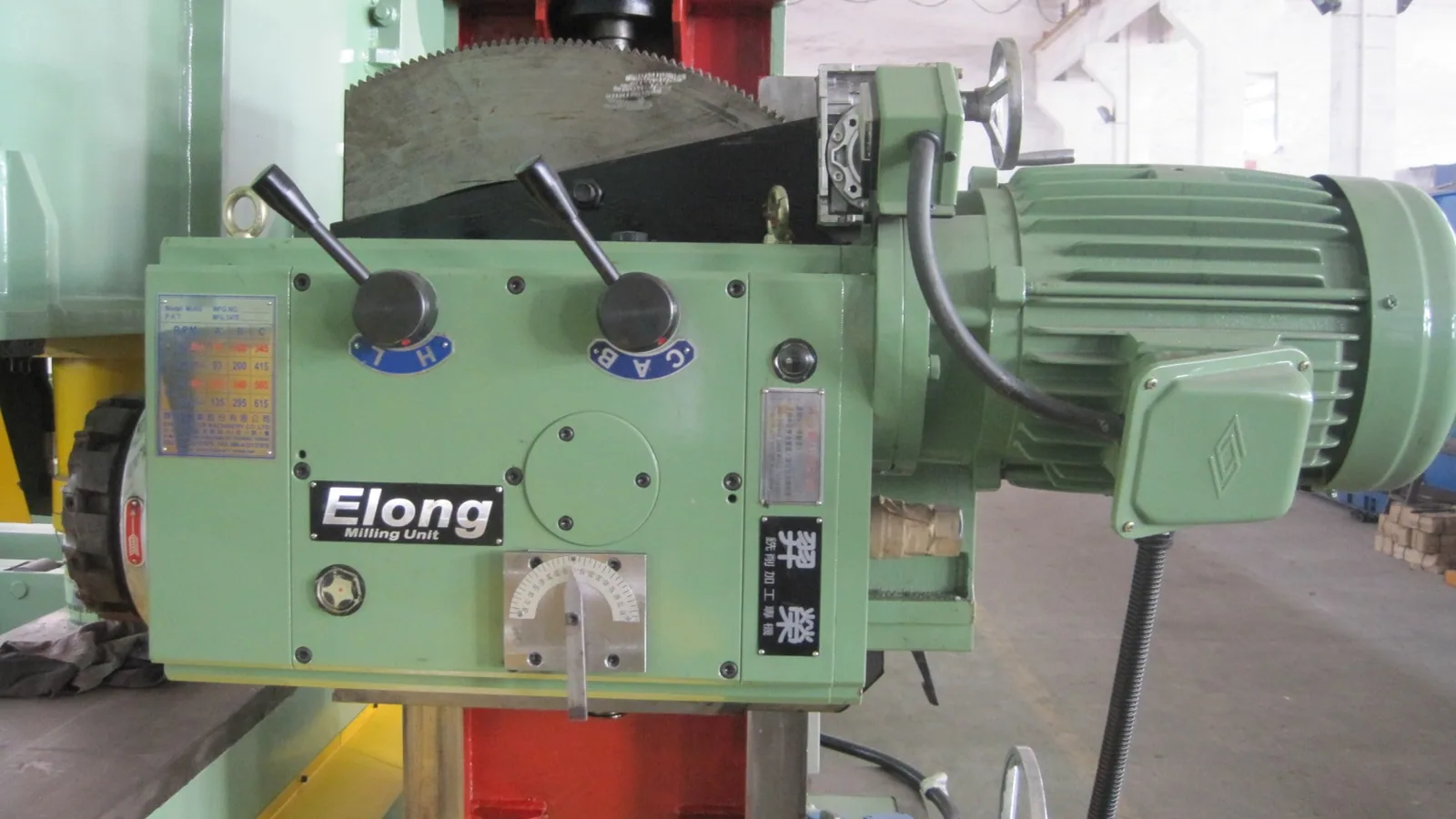
| Milling angle | 0 45 | |||
| Plate thickness | 6 50 mm | |||
| Max bevel width per pass | 12 mm | |||
| Traverse speed | 0.15 0.5 m/min (up to 3 m/min) | |||
| Spindle speed | 75 420 rpm | |||
| Hydraulic pressure | 3.5 MPa | |||
| Clamping cylinders | 8 | 11 | 15 | 19 |
| Table height | 900 mm | |||
| Feed motor | 1.5 kW, or 2.2 kW with the large milling head | |||
| Milling motor | 5.5 kW | 5.5 kW | 5.5 kW | 7.5 kW |
| Pump motor | 5.5 kW | |||
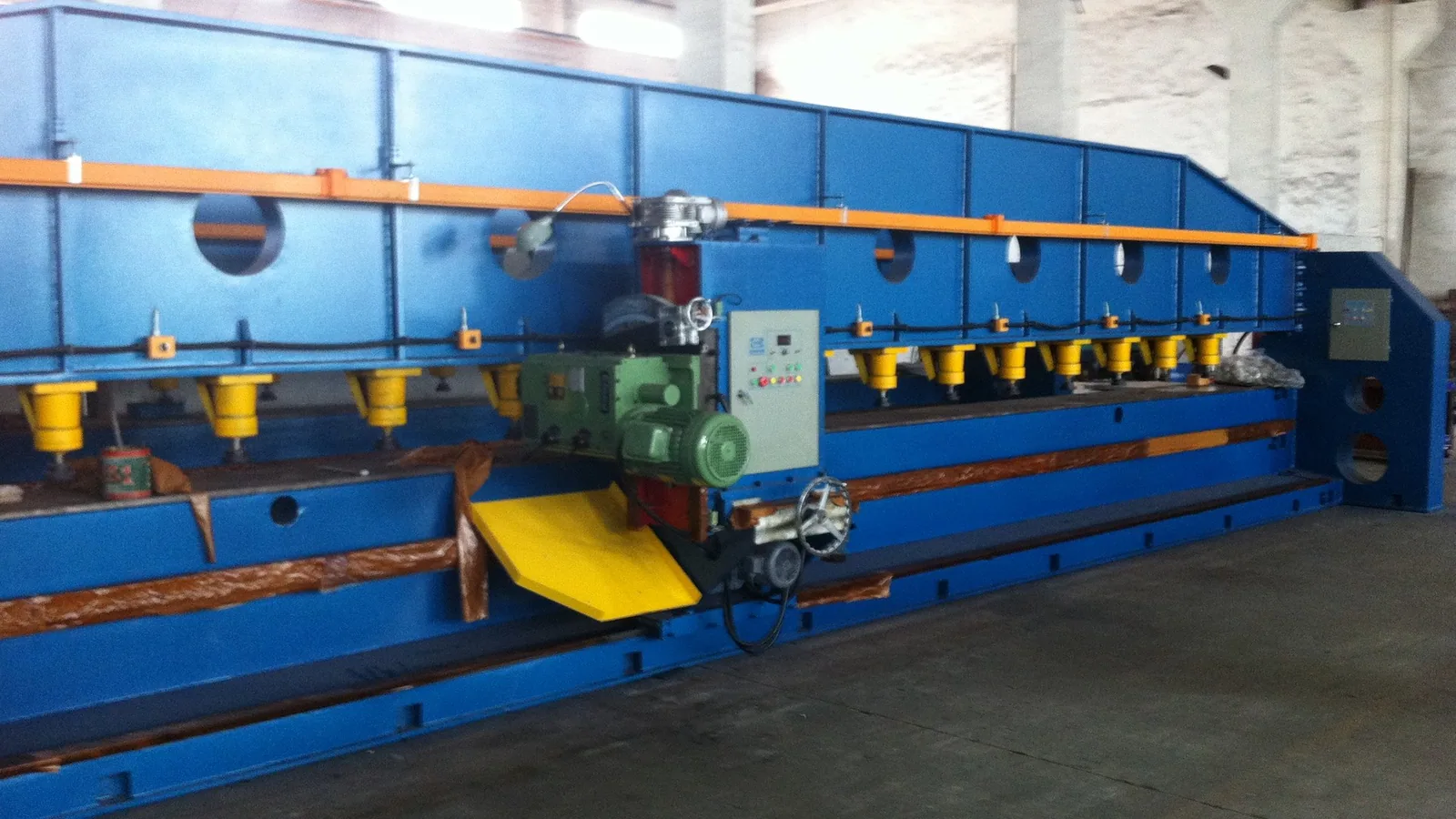
| Machine length | 7.7 m | 10.7 m | 13.7 m | 15.7 m |
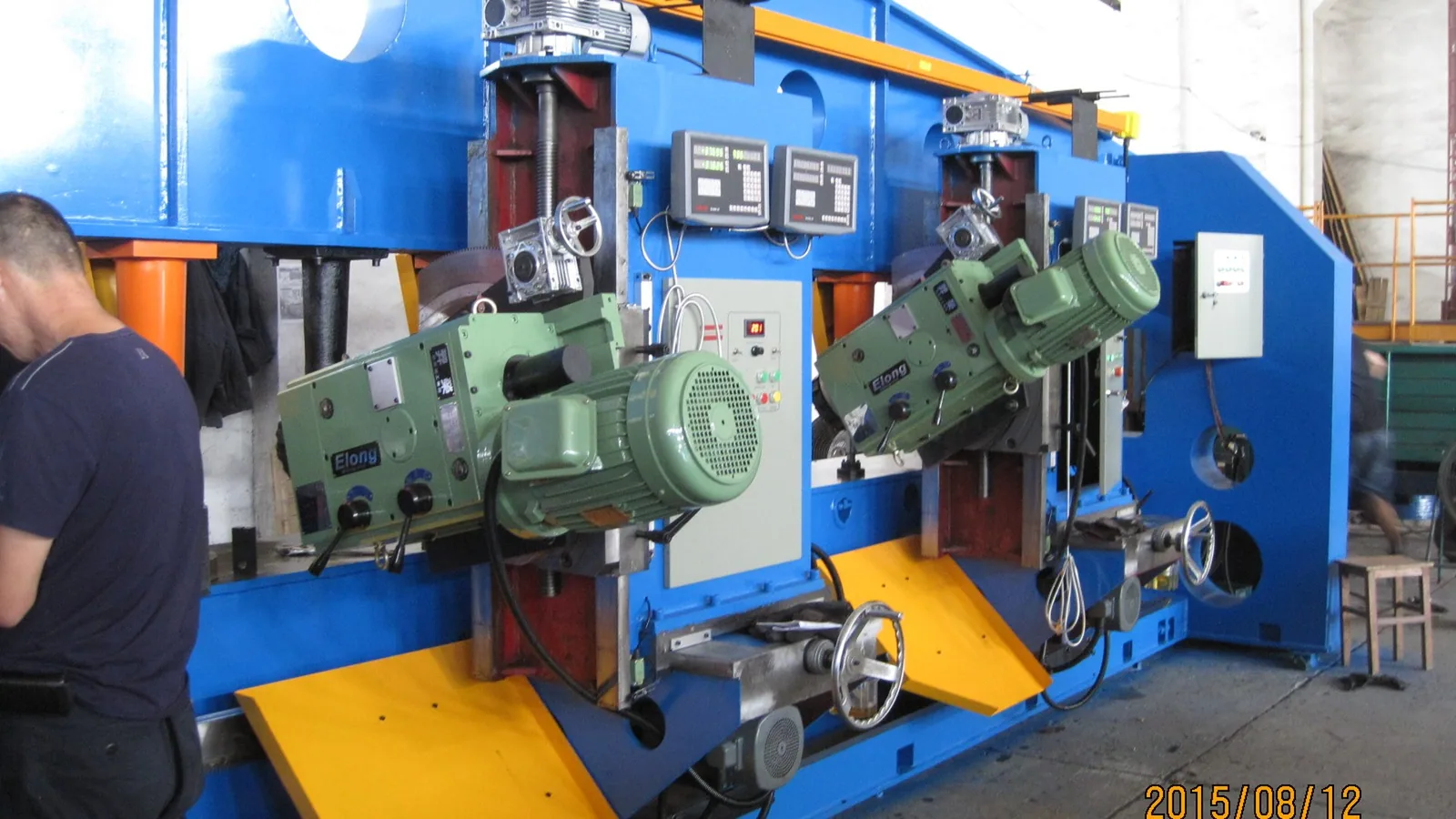
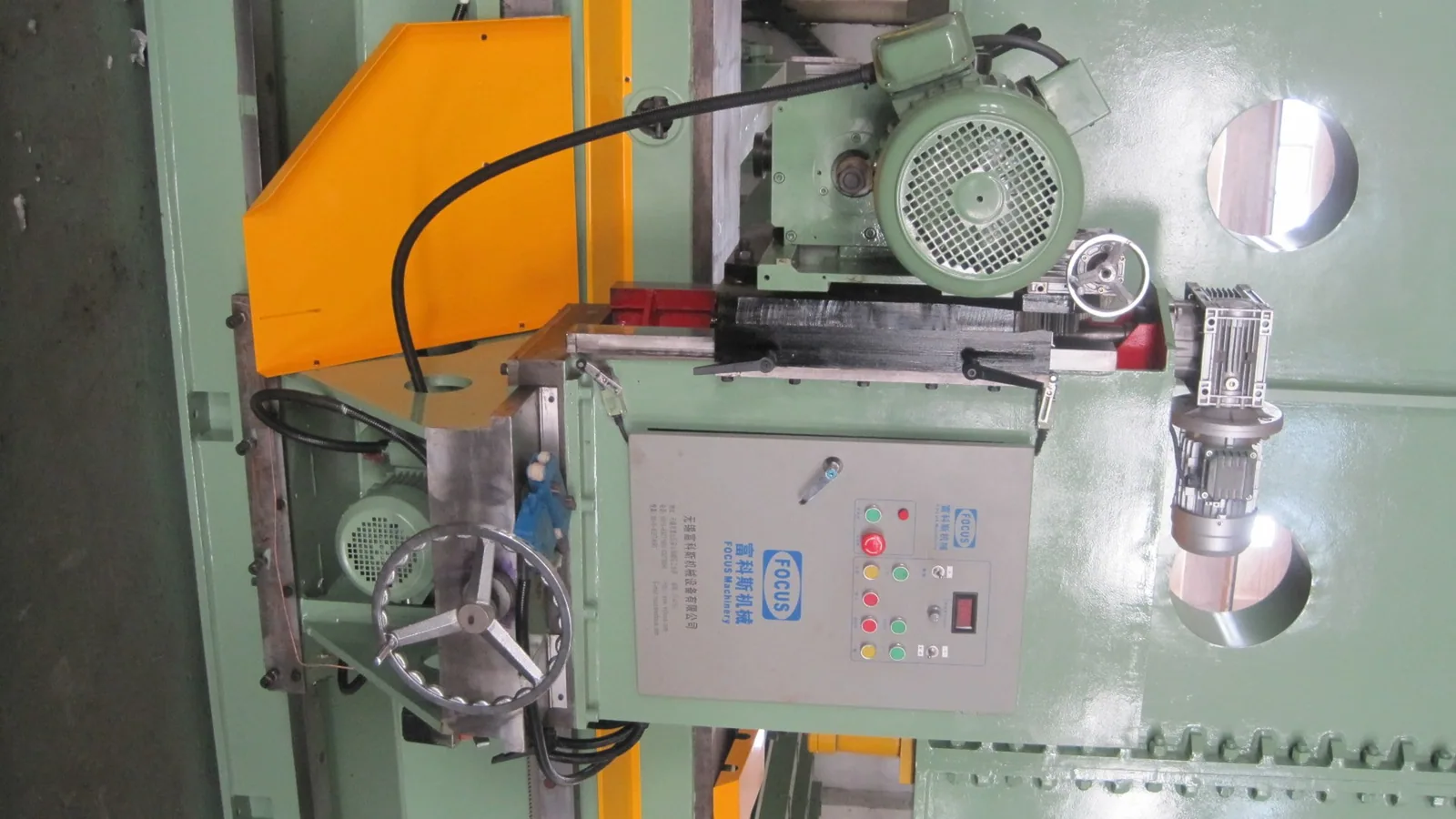
The model number is the working length in metres, and that is the number that decides whether the machine fits your shop. A 15 m bed needs 20 m of clear floor plus crane access at both ends. The 12 mm maximum bevel width per pass is the other figure people misread: a 30 mm bevel is three passes, not one, and each pass is a separate clamping setup.
Bevel geometry the welder can actually follow
Whatever the process, four dimensions decide whether the joint welds cleanly:
- Root face (land). 1.52 mm on plate up to 20 mm. Heavier lands are a common cause of lack of fusion at the root, because the welder cannot get the arc to the bottom without opening the gap.
- Bevel angle. 30 per side for a 60 included angle is standard; drop to 30 included on narrow-gap SAW. Every extra degree adds fill metal on 25 mm plate the difference between 60 and 70 included is roughly 15% more weld volume.
- Root gap. Set by the procedure, not by the fitter. 1 mm is the practical limit before you change the welding parameters.
- Edge straightness. 1 mm in 3 m is a reasonable target for a machined edge; a flame-cut edge at the same thickness will typically be 23 mm without a track-guided torch.
Where edge preparation goes wrong
Ragged edges. Usually a worn torch tip or a travel speed that is too high. The welder compensates by weaving, which changes the heat input and the grain structure.
Dross and hard spots. Flame cutting on plate with heavy mill scale leaves slag and local hardening along the cut face. Grinding it off costs more than the cut saved.
Mismatched bevels. Two plates cut on different machines, or on the same machine at different times, rarely match. On double-sided joints this shows up as an uneven root gap and asymmetric distortion.
Oxidation on stainless. Thermal cutting leaves a chromium-depleted layer that has to be ground back before welding. A milled edge avoids it entirely which is the real reason stainless work specifies machining.
A short specifying checklist
- Plate thickness range you will actually run in the next three years, not the maximum the catalogue offers
- Bevel angle and root face tolerances from your welding procedure, stated as numbers
- Whether the edge must be machined (stainless, duplex, thick plate, narrow gap) or a thermal cut is acceptable
- Available floor length, crane access and foundation a 15 m bed is an installation project, not a delivery
- Extraction and fume control, especially for plasma
- Who calibrates the torch height control, and how often
Related equipment
- Welding equipment technical specifications positioner, rotator and manipulator tables
- H-beam assembly lines where edge prep feeds the line
Conclusion
Choosing the right welding automation solution is key to improving productivity and quality in your fabrication operations.
Technical Specifications (BIQEE Welding Positioner):
Rated load capacity: 100kg 50,000kg
Tilt angle: 0 120 (variable)
Rotation speed: 0.1 2.0 rpm
Control: PLC / CNC servo (dual-mode)
Applicable process: MIG/MAG, TIG, SAW, Flux-cored