The Repetition Trade: What Automation Really Buys and What It Multiplies
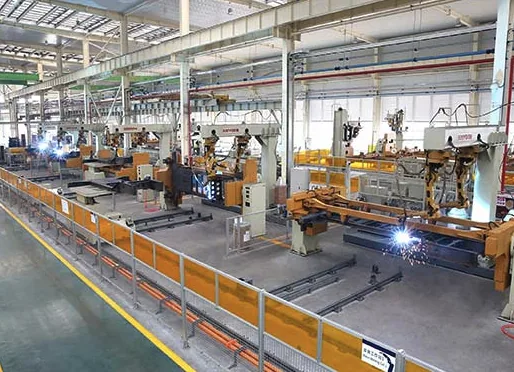
Automated arc welding in steel construction is not a general upgrade. It is a repetition trade. It pays when the same beam-column connection, pile splice, tubular truss joint, plate girder detail, or hardfaced wear part is welded the same way every shift.
The same repetition that raises deposition and lowers labor exposure also multiplies setup error. A manual welder who misreads travel speed makes one bad weld. An automated cell with the wrong travel speed makes a shifts worth, and NDT finds them together.
That is why the useful starting point is not a machine specification. It is the reject, the NDT film, the worn overlay, or the flange that pulled out of flat. Work backward from that symptom to heat input, dilution, fit-up, fixture, and qualification.
Automated welding in this sector covers two different jobs. One is structural: beam-to-column joints, tubular trusses, plate girders, pile splices, and other load-bearing connections. The other is wear protection: cladding mill rollers, chutes, buckets, and bulk material handling parts.
Both need a qualified WPS and a certified operator, but they do not fail for the same reasons. Structural work is governed by joint preparation, fit-up, heat input, NDT acceptance, distortion control, and operator qualification to the procedure. Overlay work adds dilution, hardness retention, bead overlap, and service temperature.
A shop that treats both as welding will specify the wrong variables.
The floor changes in practical ways. Parts must be presented to the torch within the programs expectation. Fit-up becomes a cell input, not a welders adjustment. Pre-shift checks become production data. First-piece verification matters more than end-of-shift visual.
Calibration of positioners, fixture stops, wire feeders, and gas delivery becomes a recurring cost line. The purchasing decision is therefore not robot or manual. It is whether the shop can control repetition: repeatable parts, repeatable fixtures, repeatable parameters, and repeatable maintenance.
Without that, automation does not remove variation. It records it and repeats it faster.
Heat Input Is the First Cost and Quality Variable
Heat input is not a metallurgical footnote. In automated steel construction it is a cost variable because it drives dilution, hardness retention, distortion, rework, and straightening labor. The control formula is simple: heat input in kJ/mm equals voltage times current times 60, divided by travel speed in mm/min times 1000.
A 300 A, 28 V arc at 650 mm/min gives 0.775 kJ/mm. That is inside the useful band for much steel overlay work. Drift to 1.0 kJ/mm and the cost model changes: more base metal enters the melt pool, hardness may bleed away, distortion risk rises, and the rework bay gets work it did not quote.
The formula is only useful if the cell knows the real travel speed and the real arc voltage. Programmed values are not evidence. A wire feed change can shift current without a program change. A contact-tip wear can shift voltage. A positioner speed error can shift travel speed. The shop floor sheet should require the operator to calculate heat input from the meter and the program at the start of the shift, not after a reject.
A real floor example shows why. A fabricator had a pulsed GMAW cell on 32 mm beam flanges and a hot-wire TIG cladding cell on 610 mm OD pipe spools for a coastal project. The cladding cell had been running 260 A, 24 V, and 380 mm/min travel, with wire feed set for a 4.2 kg/h deposition rate.
That combination gives roughly 0.99 kJ/mm, and first-layer dilution averaged 17%. Three spools failed corrosion acceptance. In the same week, a 6 m beam flange pulled 9 mm out of flat after cooling. The shop had the right process names on the WPS. It did not have heat input under control.
The correction is not a single magic number. It is a qualified window. For structural work, the WPS should state current, voltage, travel speed, wire feed, preheat, interpass temperature, gas, joint preparation, and heat input range. For overlay work, it should state those values plus dilution target, bead overlap, and hardness acceptance. Single-value WPS sheets are weak production documents because the floor drifts. A window with a verification method is stronger.
Dilution and Overlay: The Number That Decides Whether Cladding Survives
Dilution is the percentage of base metal that melts into the overlay. A 2 mm cladding layer that pulls 0.04 mm of base metal into the melt pool is running at roughly 2% dilution. That sounds harmless. In practice, it is the difference between a 550 HV10 wear surface and a layer that fails in weeks.
Over-dilution lets base metal chemistry dilute the alloy, hardness drops, and wear or corrosion resistance disappears before the parts service life is over. Under-dilution and cold lap are the other side of the trap: the overlay may look built up but lacks fusion or wetting at the boundary.
The first check is first-layer dilution, not wire chemistry alone. If a loader bucket handles hot slag above 500 C, or a vertical mill component where abrasion accounts for roughly 67% of the wear budget, the build must match the service. An overlay can pass visual and still fail hardness or wear because the first layer was too hot, too fast, or too diluted.
Check first-layer dilution before touching the wire. Then look at travel speed and heat input. Confirm the build thickness and bead overlap match the drawing and the service. Only after that should the shop chase wire feed or gas issues.
Over-dilution is usually a heat input and travel speed problem. The arc reaches too much base metal, or the pool stays too long, or the bead sequence puts too much energy into the same area. Under-dilution and cold lap are usually a low-energy or poor wetting problem: travel too fast, current too low, preheat missing, or bead overlap too thin.
The operator qualification for automated cladding is therefore a dilution-control job. It is not enough to load the program and press start. The operator must verify the first layer, the travel speed, the heat input, and the build against the qualified procedure.
The commercial consequence is direct. A 1,000 kg hardfacing deposit has obvious wire and labor costs, but heat input decides how much of that deposit is acceptable. If dilution is out of band, the shop pays for alloy, arc time, machining, and rework twice. If dilution is controlled, the same cell can hold hardness and service life without adding a second process.
Structural Grooves: Porosity, Incomplete Fusion, Undercut, and the Repetition Trap
Structural automation fails in batches because the cell repeats a setup error. Porosity shows up on the film in a structural groove weld when gas coverage is poor, wire is contaminated, the nozzle is blocked, draft is pulling shielding gas away, or contact-tip distance has drifted.
Incomplete fusion in an orbital tube joint often traces to low heat input, high travel speed, poor bevel alignment, or fit-up that puts the arc where the groove is not. Undercut along the toe after a wire feed change is a classic repetition defect: wire feed, current, voltage trim, travel angle, or position changed, and the cell kept running the same program.
These defects are not independent. A fit-up gap that is too wide can force the operator to slow down, which raises heat input and distortion. A gap that is too tight can cause incomplete fusion or excessive reinforcement. A positioner angle that is off by a few degrees can change bead shape and toe wetting.
A fixture stop that has worn can shift the joint line. The automated cell has no judgment to absorb that variation. It follows the program. The shop must therefore control the part, the fixture, the consumables, and the procedure as one system.
| Defect or symptom | Where it appears | Likely automated cause | Countermeasure to specify |
|---|---|---|---|
| Porosity on film | Structural groove weld | Poor gas coverage, dirty wire, blocked nozzle, draft, long contact-tip distance | Gas flow verification, wire cleanliness, nozzle maintenance, draft shielding, tip-to-work distance in WPS |
| Incomplete fusion | Orbital tube joint | Low heat input, high travel speed, bevel misalignment, poor fit-up | Qualified parameter window, fit-up gauge, bevel inspection, preheat and heat input range |
| Undercut along toe | Structural fillet or groove toe | Wire feed change, current-voltage mismatch, travel angle, position drift | Wire feed calibration, parameter trim check, travel angle in procedure, first-piece toe inspection |
| Soft overlay or wear-through in weeks | Cladding on wear parts | Over-dilution from excess heat input or slow travel | First-layer dilution check, heat input cap, travel speed window, hardness acceptance |
| Cold lap or under-dilution | Overlay boundary | Low heat input, fast travel, poor wetting, insufficient preheat | Lower heat input bound, preheat control, bead overlap, boundary fusion check |
| Out-of-flat after cooling | Beam flange or plate assembly | Excess heat input, poor sequence, weak restraint, fit-up stress | Heat input limit, balanced sequence, fixture and positioner plan, pre-set and straightening allowance |
Fixtures, Positioners, and Fit-Up: Pay at the Saw or Pay at the Arc
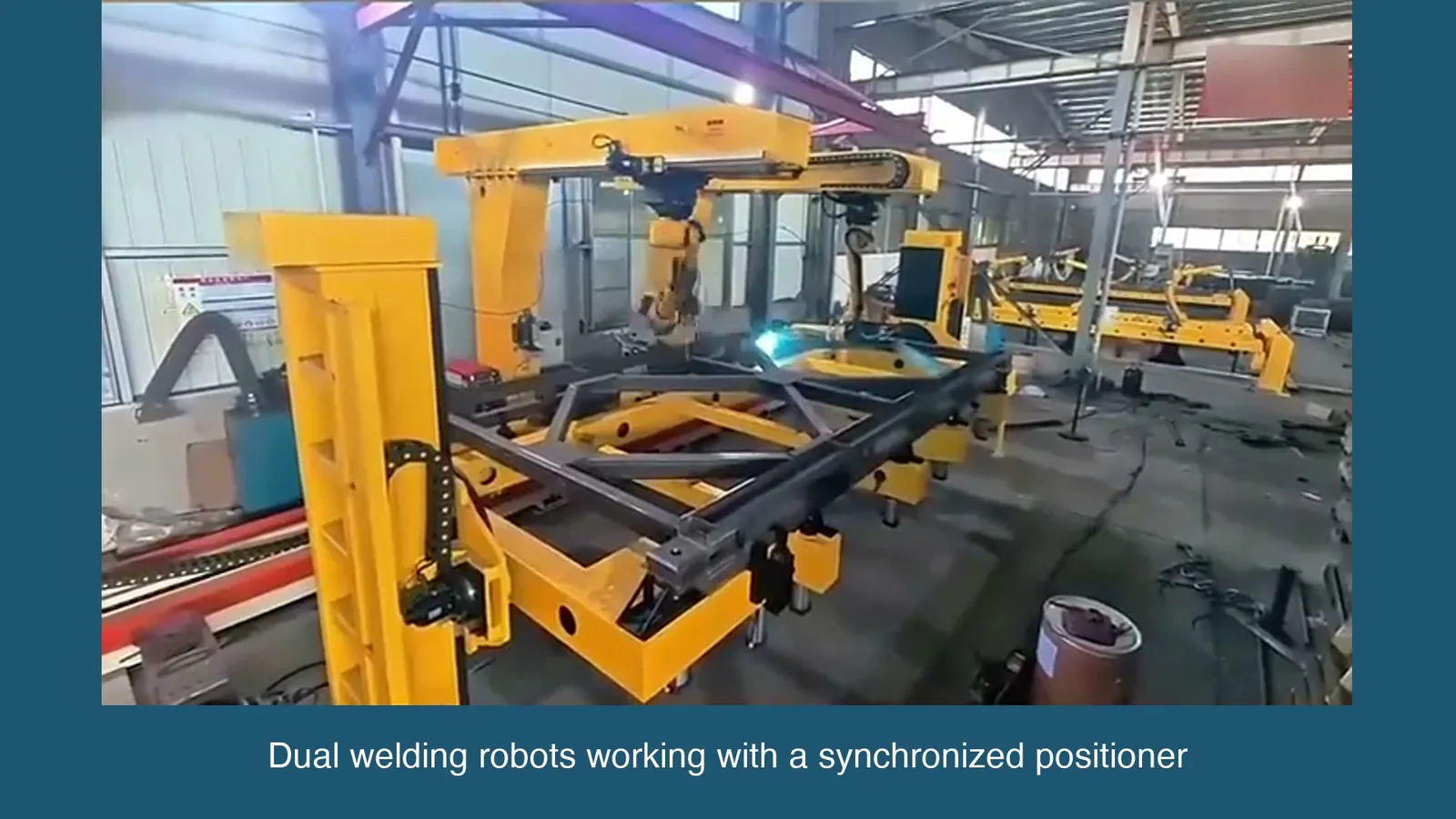
Automated welding does not forgive a loose part. The torch follows the program; the part has to be where the program expects it. That makes fixture and positioner choice a cost decision, not a catalog decision. The money is not in the steel frame alone.
It is in locator accuracy, clamping force, positioner speed control, calibration labor, and the rework avoided or created. Five places take the budget: fixture design and machined locators; clamping hardware and force capacity; positioner payload, rotation, and tilt accuracy; calibration and preventive maintenance; and the rework generated by poor repeatability.
Locator accuracy is a machining bill. Hardened backstops, positive stops, collet or chuck geometry, and datum-matched pins are not cheap, but they decide whether the cell can run the same program across a batch. Clamping force is another pay-now or pay-later item.
Too little force lets the part move during welding, which shows up as inconsistent penetration, undercut, or distortion. Too much force can distort thin parts before the arc starts. Positioner payload and speed accuracy matter because the torch angle and travel speed are only as good as the positioners motion.
A positioner that lags or overshoots changes heat input at the joint.
Calibration and maintenance are recurring lines. Daily checks, fixture stop wear, positioner backlash, gas nozzle condition, wire liner condition, and torch cleaning all belong in the cells operating cost. A shop that buys a cell but not the calibration discipline will spend the savings on rework.
The example of 120 wear plates and 40 beam splices is useful because it forces the question: does one fixture family handle both, or does every changeover consume the margin? If changeover and calibration dominate, the cell may still be right for the wear plates but wrong for the beam splices, or the other way around.
The part count and changeover frequency decide.
Fit-up tolerance is cheap at the saw and expensive at the arc. If the fit-up varies more than the process window can absorb, automation will either burn through, miss fusion, or deposit excess weld metal. Control the fit-up before the cell. Use gauges, positive stops, and bevel checks.
Distortion is a labor line item, not a welding mystery. A 6 m flange that pulls 9 mm out of flat is straightening labor, possible scrap, and a schedule hit. The quote should carry heat input limits, weld sequence, restraint plan, and a straightening allowance.
The denominator should be cost per acceptable kilogram of deposited weld metal, not arc time.
The Cost Model: Cost per Acceptable Kilogram, Not Arc Time
Most shops quote labor and wire. That is not a cost model; it is half a cost model. For automated structural welding and hardfacing, build the estimate from cost per acceptable kilogram of deposited weld metal. If the shop quotes gross deposited kilograms, scrap, rework, NDT rejects, and straightening hide in overhead. The estimate should include weld metal, arc labor, fit-up and beveling, fixture amortization, calibration and maintenance, NDT, rework, and straightening.
A worked example makes the logic visible. Wire, flux, and gas at $3.50/kg deposited, loaded arc labor at $95/h, and a 4.5 kg/h deposition rate at 650 A and 30 V gives 22.2 h for 100 kg of deposit. That is $2,111 in arc labor before fit-up. Add 5 h of fit-up and beveling at $95/h, or $475, and the job is already at $2,586 before NDT, fixture time, and rework.
If the procedure also creates distortion, the straightening press adds labor that never appears in the arc-time quote. Heat input belongs in this model because it changes dilution, hardness retention, distortion, and how much of the 100 kg is acceptable.
The shop floor sheet should carry the variables that move cost: heat input range, dilution target for overlay, deposition rate, travel speed, preheat and interpass temperature, fit-up tolerance, clamp force, positioner angle, calibration status, and first-piece verification. The operator should be able to calculate heat input from current, voltage, and travel speed.
The supervisor should be able to compare the first-piece NDT result with the production run. The estimator should be able to see the rework rate and straightening hours. Without those links, the cells cost model is just a purchase price and a labor rate.
For structural work, the acceptable-kilogram model also exposes the fit-up problem. A joint that is cheap at the saw but out of tolerance at the arc will consume arc time, re
Automated welding in other sectors
If you work across more than one sector, these guides use the same engineering logic with the numbers that differ by industry.
H-Beam Assembly Welding Line
Technical Specifications:
| Model | Web Height (mm) | Flange Width (mm) | Web Thickness (mm) | Flange Thickness (mm) | Length (m) |
|---|---|---|---|---|---|
| HBL-1000 | 200-1000 | 150-400 | 6-30 | 6-30 | 6-15 |
| HBL-1500 | 300-1500 | 200-500 | 6-40 | 6-40 | 6-18 |
| HBL-2000 | 400-2000 | 200-600 | 8-40 | 8-40 | 6-24 |
Note: Full production line: assembly tacking submerged arc welding straightening. CNC controlled. Production speed up to 20m/hour.
For detailed specifications and pricing, contact us at [email protected] or visit https://biqee.cn.
Conclusion
Choosing the right welding automation solution is key to improving productivity and quality in your fabrication operations.